
When your website or let’s say, your game (developed by you) starts growing, shared hosting or even VPS servers can feel limiting. Your high-traffic website may perform slow or your website may even have security concerns (like your data is prone to hacking) if you’re on shared or any traditional web hosting.
So what should you do to solve the issue mentioned above? Go for the right bare metal servers to ensure your website runs well under heavy load and more performance requirements.
Bare metal servers allow you full control over physical server hardware, means you get better speed and strong security.
For big projects (like High-Performance Computing, a multiplayer game streaming, or big data analytics) that can’t afford downtime, using a bare metal server is the best solution as it offers powerful data processing.
In this blog, we’re going to talk about everything like what are the key features of a bare metal server? and how it works behind the scenes. We’ll also learn when to choose a bare metal server and what are advantages and disadvantages of choosing it.
By the end of this blog, you’ll have a complete picture of bare metal servers. So, in this way, you can confidently decide if they’re the right fit for your needs.
How does a bare metal server work?
Let’s first understand how a bare metal server actually works. A bare metal server is a big physical machine that is dedicated only to one user (No other users share the server hardware).
This means that you get 100% direct access to the server’s full power (like GPU infrastructure, DDR4 /5 RAM, 1 to 10 Gbps Uplink, incredible network).
It actually uses a direct path to transfer data in SSD drives to speed up the response rate. Due to the lack of a hypervisor (the connecting link between the hardware and software), it reduces latency and boosts data loading speed.
As you can see, bare metal servers provide a dedicated way of handling super-heavy workloads like training AI / ML models or handling large databases.
Key Characteristics of Bare Metal Infrastructure
Now that you’ve understood how a GPU bare metal server works, it’s time to dig deeper and learn the characteristics as well. Our technical experts have analyzed some key qualities of bare metal servers that make them a top choice for developers, data scientists, and engineers around the globe.
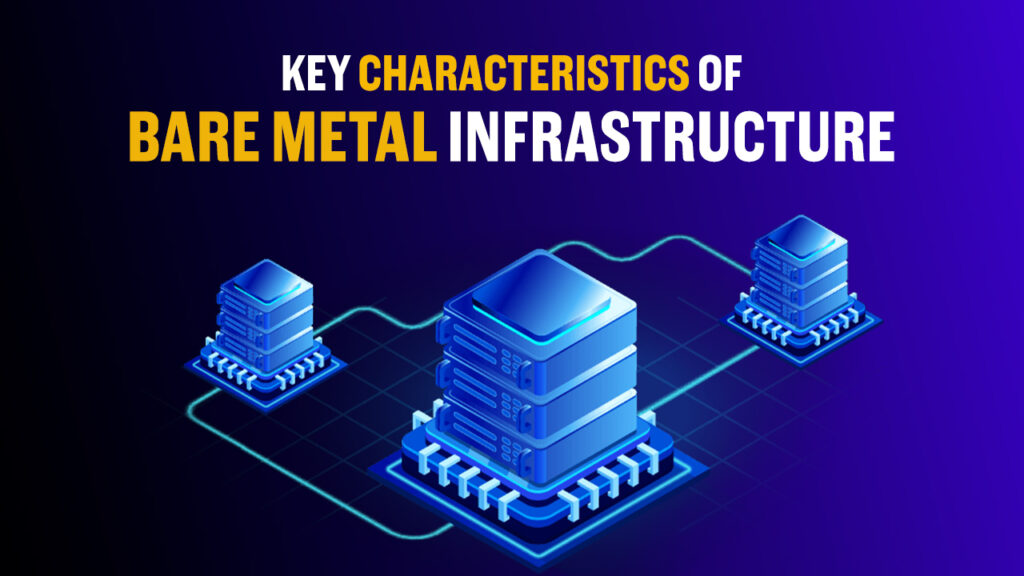
Here are some key characteristics of bare metal infrastructure:
Dedicated Resources
Dedicated resources mean that the whole hardware system is committed to a single user. In contrast to other servers where performance isn’t consistent due to resource sharing, bare metal servers provide raw SSDs, RAM, and processors so that users don’t have to deal with noisy neighbours who steal the resources and slow down the performance.
Customization
As tech hubs have resource-specific requirements, they need full control over the hardware tools. This is the reason why bare metal servers are in high demand, because they provide full root access to the users. It means you can choose any type of processor based on clock speed, RAM (DDR4/5), storage type ( NVMe, SSD) and bandwidth limit.
Predictable Performance
Along with the resources and full root customization, the lack of virtualization also boosts the performance of a bare metal server. In comparison to other servers that use hypervisors and virtual drives to transport data, a bare metal server directly delivers data to the OS. It means that your data won’t have to interact with other layers that consume time.
High Security
Now, it’s time to discuss the security features of these servers. When it comes to data privacy, nobody can match bare metal servers because they offer complete physical isolation that avoids noisy neighbours who peek into the database. Along with this, it provides hardware-level security with the help of SEDs and IntelSGX that encrypts the database and protects it from unauthorized access and malware attacks.
When should you use Bare Metal? (Use Cases)?
You should use Bare metal server to manage high-speed workloads that need 24/7 internet connectivity. When we say high-speed workload, we are not talking about any online store or website with normal traffic; rather, it refers to the technical hubs whose workforce is totally dependent on computing power.
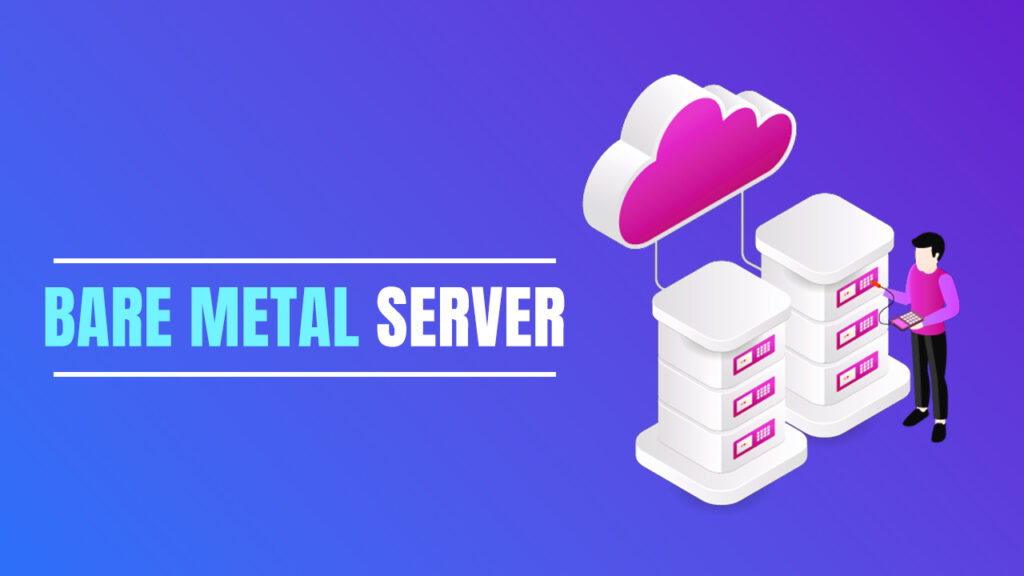
If you’re still confused, then don’t worry, as we have listed some use cases of bare metal server below:
Big Data & Analytics
Big data itself means a large amount of data. So when we say big data and analytics, it refers to those firms who analyze data continuously without a break. For example, a trading platform that analyzes the market and gives real-time stats to the users. Other Fintech hubs and streaming platforms also need consistent uptime and high-quality resources.
AI & Machine Learning
AI development and LLM are dependent on resource-intensive servers because they have to perform complex mathematical operations for training and deployment. The direct connectivity of application and hardware in bare metal servers reduces the latency and speeds up the data transfer, helping AI models to process data and perform calculations quickly.
Gaming Servers
In the gaming world, performance is the main thing as it affects the player’s actions and strategy. Poor servers with limited storage reduce uptime, affecting gamer’s performance. Therefore, multiplayer open-world games require bare metal servers to manage high-speed and constant changes in the gameplay.
High-Traffic Databases:
And the next thing is fast I/O processing, often found in bare metal servers, that simplifies the communication of databases and NVMe drives. High-traffic databases like SQL need fast I/O processing to deliver quick results. The presence of virtual drivers acts as the middleman between the input and output, whereas bare metal servers create a direct path for data travel.
Regulatory Compliance
GPU bare metal server prevents side channel attacks and data theft caused by resource sharing, as the entire physical machine is assigned to a single user. This also allows servers to follow security standards like PCI-DSS (Payment Card Industry Data Security Standard) and GDPR ( General Data Protection Regulation ).
Pros & Cons of Bare Metal Servers
Pros+
Pros
- High-speed performance
- Strict GDPR, HIPAA, and PCI-DSS compliance
- Full root customization
- No resource sharing
Cons
- Expensive
- Low scalability
How to choose the right bare metal server provider?
Finding the right bare metal server is really easy when you know your requirements. To make it simple, we have listed some points that’ll help you get a suitable bare metal server for your needs.
Here are some tips to choose the right bare metal server provider:
FAQ
Q1: Is bare metal faster than cloud?
A: Yes, bare metal servers are faster than cloud servers because the whole physical component is dedicated to a single user rather than multiple users. Cloud servers are slower because multiple users share the same server, causing performance slowdowns.
Q2: Why is it called bare metal?
A: Bare means raw, and metal means the physical hardware. Since bare metal servers provide the whole physical machine to the user for control and customization, it is referred to as bare metal.
Q3: Is bare metal more expensive than AWS?
A: Yes, bare metal servers are more expensive than AWS because they are built for heavy workload, where users pay for the whole physical component. AWS is a cloud platform where users only pay for what they consume.
Q4: Who uses bare metal servers?
A: Bare metal servers are mostly used by large tech firms, Fintech companies, healthcare organizations, gaming studios and software developers as they have to perform high data processing.
Q5: Can you run a hypervisor on bare metal?
A: Yes, you can run a hypervisor on bare metal servers, as it offers full customization. Many tech companies often install TYPE1 hypervisor to gain performance benefits.
Final Words On:- (What is a Bare Metal Server?)
Analysts, handling big data records, game developers and other users like big production media houses have to deal with an enormous amount of data processing that requires 24/7 connectivity and high-speed processing.
Using a normal web hosting service (like shared or VPS server) isn’t a good option at all as they badly affect the work performance and reduce productivity.
Gratefully, we have bare metal servers that offer high-end resources, full control, a robust security system and unmatched performance to ensure seamless data transfer and high uptime.
If you aren’t fully aware of bare metal servers, then check out our blog right now! We have cited all the valuable information about these servers, including the key characteristics, use cases, pros & Cons.
And if you are planning to purchase a bare metal server, then don’t forget to read the key considerations listed by our tech experts.